
Launchpad Technologies Branding
Date: 2019–2024 / Sector: Enterprise Technology (iPaaS & Digital Transformation)
Services: Brand Strategy, Visual Identity, Website Design & UX, CMS Migration, Site Optimization
As Director of Brand and Communications, I led the visual identity and website design for Launchpad Technologies over five years — from initial concept through launch, and through the ongoing iteration that comes with owning a brand as a company scales. I was the primary designer on the work, and I built and led the cross-functional team of writers, developers, and stakeholders needed to bring it to life.
Process
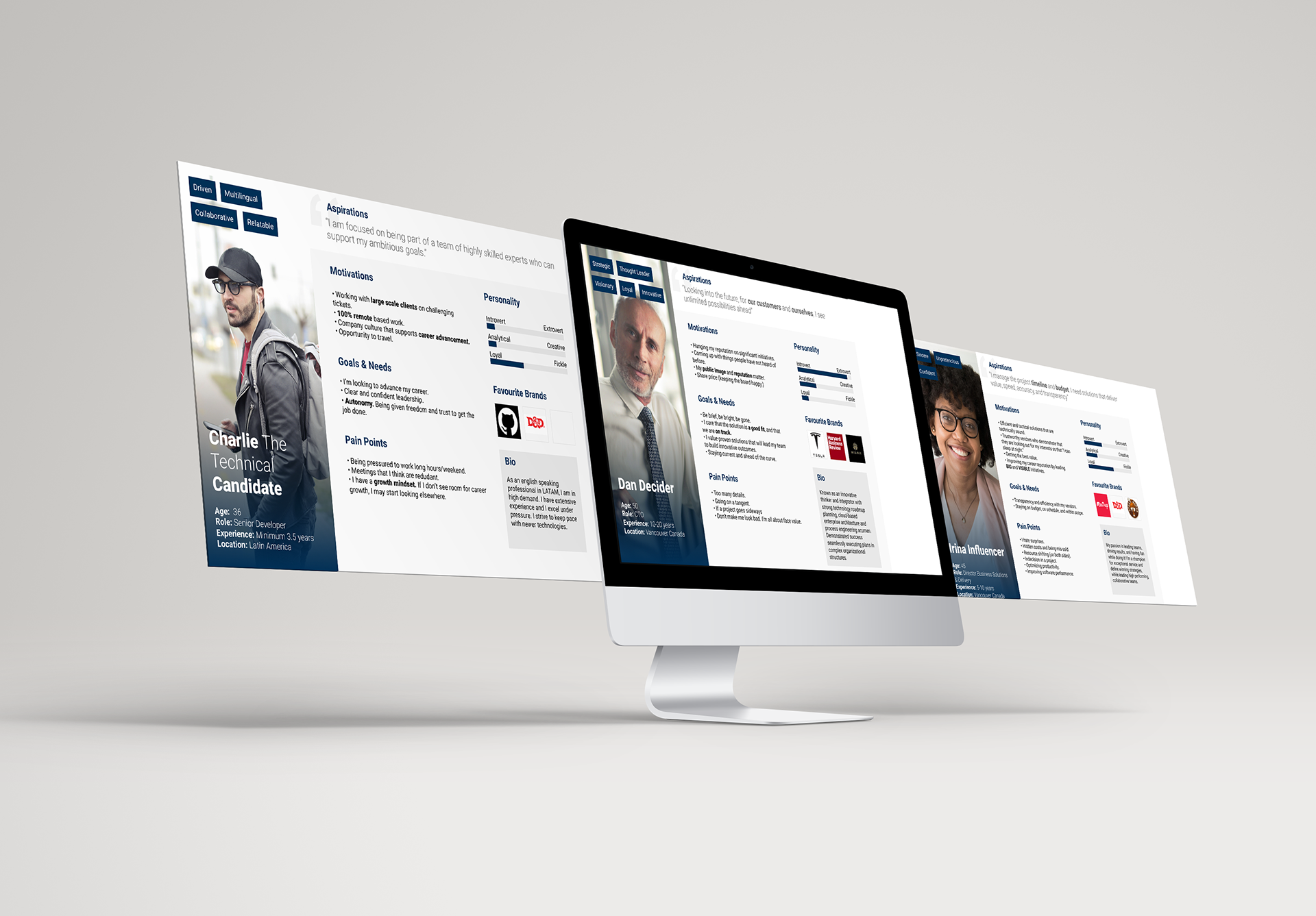
I started with user research rather than visual direction. I built out persona stories for Launchpad's core buyer types and identified real individuals matching those profiles to beta test wireframe flows and early prototypes — not just internal stakeholders reviewing mockups in a vacuum. All design work was anchored in Figma, moving from low-fidelity wireframes through a full component-based design system, with structured design sprints and formal hand-offs to the development team.
Because I owned this work over five years rather than a single project cycle, the process was never a one-time launch-and-walk-away. I led ongoing usability testing and iteration cycles, collaborated directly with executive leadership on how the site needed to evolve alongside the business, and continually refined the experience based on real user behavior rather than assumption.
Brand & Visual Identity
The identity system needed to do two things at once: read as credible to enterprise technology buyers (Salesforce, Splunk, Time Magazine, and GM Motors are among Launchpad's clients) while still feeling approachable and human — a deliberate counterpoint to the sterility that a lot of enterprise SaaS branding defaults to. That balance shows up in the "Launch Faster / Launch Easier / Launch For Less" messaging frameworks I developed to make two different offerings instantly parseable using the same brand language, just retuned for each audience.
Website Design & UX
The site's information architecture was rebuilt around the segmentation problem directly: Platform and Managed Services became distinct, parallel top-level paths, each with its own sub-navigation, rather than a single generic services menu forcing every visitor down the same road. Within Platform, industry- and use-case-specific pages (Manufacturing, Defense, Customer 360, Quote to Cash, Cash Management, Order Fulfillment, M&A Readiness) let prospects self-identify quickly instead of parsing generic capability lists.
I also led the migration of the site from WordPress to Craft CMS — a decision driven by the limitations of the old platform against what a growing, content-heavy enterprise site actually needed: more flexible content modeling, better editorial control for the marketing team, and a more stable foundation for the segmented IA. Alongside the rebuild, I introduced the site's first real measurement infrastructure: Google Analytics, heatmap tracking, and PR monitoring, so that design decisions after launch could be driven by actual user behavior rather than internal opinion.
Results
- 3 months from concept to launch
- 400% year-over-year increase in brand awareness
- A segmented site architecture that let Launchpad speak clearly to two distinct buyer types under one cohesive brand
- A measurement foundation (analytics, heatmaps, PR monitoring) that made the site a living, testable asset rather than a static launch-and-forget project
Corporate Templates
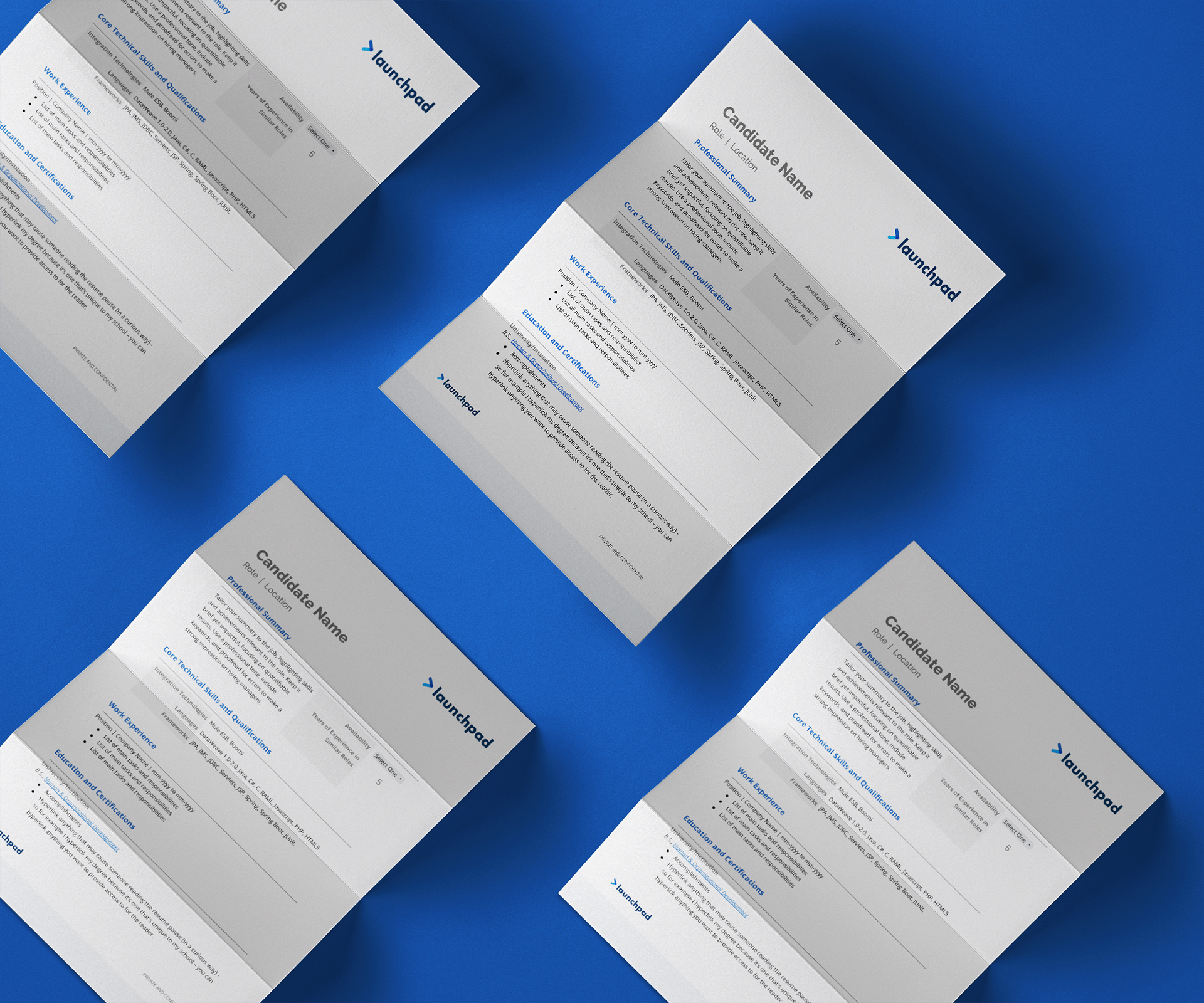
Designed a suite of corporate templates, including stationery, sales decks, email signatures, and multi-touchpoint brand elements. These templates are tailored to uphold the brand's visual identity while providing flexibility for various corporate needs and communications.
Working across five years on the same brand taught me that a rebrand isn't a single deliverable — it's a system you have to keep tending. The identity, the IA, and the CMS all had to be built to flex as the business itself split, grew, and repositioned, and that meant treating design as an ongoing discipline owned in close partnership with engineering, marketing, and executive leadership — not a project that ends at handoff.Photo Art Direction